
Andrew Mcmullan, Design Council expert and design director and architecture practice leader at Perkins&Will London, discusses architectural designs’ role in creating better spaces
We spend a lot of time talking about what buildings and places look like, and increasingly about how much carbon they use. But if the buildings and places we create shape how people live for generations, shouldn’t we be asking much more of them?
Their impact goes far beyond their physical form. The places we shape influence how we meet, move, work and care. They can bring people together or push them apart, make healthier lives easier or harder, and strengthen or slowly erode a sense of belonging.
And we’re making these decisions at a moment of extraordinary change. AI is changing how we work and create. Climate change is changing what our cities need to cope with. We’re living longer, but becoming more socially isolated. A seven-year-old today will experience work, education, healthcare and the city very differently by the time they are my age.
And here’s the uncomfortable bit: according to the Office for National Statistics, 60% of adults in Britain don’t believe today’s children will have a better future than their generation. That’s a pretty miserable prediction, but I don’t think we should accept it as the brief.
Design is always making a bet on the future. As a design council expert, this is something I’ve become increasingly interested in – how do we make that bet more informed? A building we start designing now might not open for another five or ten years and could still be standing in 2126. Yet our industry is understandably focused on what’s immediately in front of us: today’s brief, market, regulations, and idea of value.
At Perkins&Will in London, we’re trying to look further ahead while getting better at understanding what’s happening now. Evidence helps us understand how people and places behave today. Foresight helps us think about how that might change. Regenerative design gives us somewhere better to aim for.
The ambition isn’t to predict the future, as we’d almost certainly get it wrong. It’s to make better decisions.
Stop predicting buildings. Start understanding people.
Perkins&Will’s Futures We Build programme came partly from a feeling that the usual conversation about the future of architecture had become too narrow. Technology tends to take over: smart buildings, AI, automation and new materials. All of those things will change architecture, but they aren’t the future. People are.
So we brought together designers, researchers, clients, business leaders and people from outside architecture to talk about three things: magic, communities and resilience. They sound almost deliberately ‘unarchitectural’, which was part of the point. We quickly stopped talking about what future buildings might look like and started talking about what people might actually need from them.
Some strange contradictions are already appearing. We’ve never been more digitally connected, but many of us feel increasingly isolated. We can work from almost anywhere, yet we’re rediscovering why being together matters.
That matters to architecture because if technology removes some practical reasons to go somewhere, the other reasons become much more important. A workplace has to offer more than a desk and Wi-Fi. A high street has to offer more than shopping. If everything we need can arrive at our front door or appear on a screen, we need to give people much better reasons to leave the house.
That means the most interesting briefs are no longer really about buildings. They’re about behaviour, experience and change. The best clients are the ones who want to explore that with us, using design to ask better questions and uncover opportunities we could not necessarily have seen at the start.
Our SIGNALS group, a Perkins&Will-led strategic foresight and horizon-scanning initiative, helps us look beyond architecture to identify behavioural, technological and cultural shifts that may shape the future. When the team went to Milan Design Week, one of the most interesting things was how little AI featured in the work that stayed with us. We went expecting to talk about artificial intelligence and came back talking about human intelligence. The more capable technology becomes, the more precious the things it can’t easily reproduce become: touch, making something with your hands and being somewhere with other people.
For us, foresight isn’t about drawing London in 2050 and pretending we’ve predicted it. It’s about spotting change earlier, imagining a few different ways things might go, and asking whether what we’re designing today is adaptable enough to handle them. But looking ahead is not enough if we fail to learn from what is already around us. That’s where evidence comes in.
Are we measuring what matters?
Architecture has a terrible feedback loop. We spend years designing a building, hand it over, photograph it and move on. Which is slightly ridiculous, because that’s the moment we finally discover whether it works.
People arrive. They move the furniture, ignore the route we thought they’d take and find places to meet that we hadn’t intended. All those assumptions we made suddenly meet real life.
At the same time, we’ve never been able to collect more information about buildings and places. We can model daylight before a wall is built, measure energy and temperature in real time, and track how spaces are occupied. The harder question is what we do with that data.
More data doesn’t automatically make a better place. You can measure a street down to the last tree, bench and shopfront and still miss why somebody loves walking down it. Perhaps “how do you know?” is one of the most useful questions a client can ask an architect. It helps us separate what we know from what we assume, and decide where intuition still has a role.
For me, evidence becomes useful when it changes a decision.
A few years ago, our London team tested emotion-sensing technology in the workplace. Could a camera read someone’s expression and tell whether a space made them happier, more stressed, or more engaged?
The technology could interpret individual emotions accurately only about half the time. Human beings, unsurprisingly, turned out to be more complicated than the algorithm. A frown might mean someone is unhappy, or simply concentrating. It was a useful warning: just because we can count something doesn’t necessarily mean we understand it.
Perkins&Will’s London studio gives us another chance to explore that. At 150 Holborn, the building is effectively a living lab. We can compare how it performs and is used with the experiences of the people inside it. Why is one space always busy and another empty? Why do people gather somewhere we didn’t expect? Those observations can change this building where possible, but more importantly, they can change the next one.
The same thinking works at the city scale. Our StreetSeen tool measures characteristics that shape the experience of a street. In Downtown Orlando, we collected more than 25,000 individual data points across the city centre.
The evidence identified where intervention could make the biggest difference and informed physical changes: wider pavements, more trees and places to sit, and streets that could host festivals rather than simply traffic. It’s a simple cycle: measure, understand, change something, then measure again.
We can start even earlier. Our PRECEDE research brings public health, environmental and demographic information into the beginning of the design process. Rather than starting with the building, it starts with the people and place around it. What health inequalities exist, and what does this community actually need?
At Morrow High School in Atlanta, public health data showed high levels of obesity in the surrounding community. That became a design decision: prominent stairs and an S-shaped plan that encourages students to move more throughout an ordinary school day.
But data has limits. It tends to love averages. People aren’t average.
PEARL, the Person-Environment-Activity Research Laboratory at UCL, helps researchers test how different people respond to built environments at full scale. Research there has already influenced transport accessibility and helps ensure experiences that might otherwise be averaged out become part of the evidence base.
This is where data becomes genuinely interesting for architecture. Not more dashboards, but better understanding and better decisions. Evidence should sharpen our imagination, not replace it.
Doing less harm isn’t enough
For decades, sustainability has quite rightly focused on reduction: less energy, carbon, water and waste, and fewer harmful materials. We need all of that, and much faster. But there is a problem with defining success entirely by how much less damage we do: a building that does less harm is still doing harm.
Regenerative design starts somewhere different. For us, it means leaving things better than we found them by asking how a project can actively give something back to people, communities, culture, and nature.
That connects strongly with my work as a Design Council Expert, where the conversation increasingly goes beyond what we design to the wider outcomes design can enable.
And if we’re going to use the word better, we should be prepared to say what we mean by it. Better for whom? Better health, more biodiversity or stronger social connection? And how will we know? “Better” can’t just be something we put in the design statement. That leads to a different conversation at the beginning of a project. Not simply: what do we need to build? But: what could be better because we built it?
Programme, value and delivery still matter enormously. But so does being curious about what else an investment might unlock, and being open to opportunities that weren’t obvious when the brief was written. It also makes the project bigger than the red line. The red line might matter enormously to the contract, but water, nature, people and communities have a habit of ignoring it. What we do on one site can have consequences far beyond it.
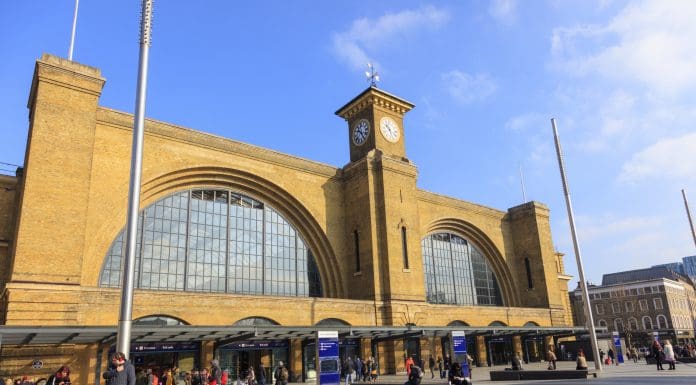
At Tribeca in King’s Cross, the job isn’t only to make excellent laboratories. We’re interested in what happens when science becomes part of the city rather than something hidden away from it. The labs matter, but so do the streets, landscape, public spaces, ground floors and the neighbourhood around them. A highly specialist building can still contribute to ordinary city life.
Healthcare gives us another version of the same idea. At Oriel King’s Cross, the new centre for eye care, research and education, we’re thinking beyond the clinical function of a hospital to the wider conditions for health. Nature, daylight, movement and art all become part of that. A hospital obviously needs to be brilliant at treating illness. But can the place itself also help people stay well?
Nature is particularly important. We still have a habit of treating landscape as something that comes with the architecture: the building is designed and then, somewhere towards the end, the trees appear. In a changing climate, that distinction makes less and less sense. Unlike most buildings, nature tends to get better with age.
A tree planted when a building opens may be far more valuable 30 years later. A habitat can become richer, and a community can take ownership of a public space in ways its designers never imagined. Increasingly, we’re designing buildings and places with the same expectation: opening day shouldn’t be their best day.
Remember that 60% don’t believe today’s children will inherit a better future? I find that statistic shocking but also motivating. Surely the answer to a damaged planet can’t simply be a slightly less enjoyable version of the one we have now.
We can have less carbon and more nature. Less consumption and more public life. Fewer cars and healthier streets. We can use fewer resources while building places that last longer and give us more opportunities to participate in the life around us. Use less but give more. That feels like a much more interesting design challenge than simply making today’s model more efficient.
It’s also why younger voices in our studio matter. They will live longest with the consequences of the decisions we’re making today.
Regenerative design asks us to think in much the same way. A tree can cool a street, hold water, create habitat, give someone shade and make the place more beautiful. Why wouldn’t we want more of our design decisions to work that hard?
Which brings us back to the future
The buildings and places we’re designing now will live through changes we can’t accurately predict. AI will change work and learning. Climate and communities will change. Some things that seem extraordinary today will become completely ordinary.
So perhaps we need to become less obsessed with designing finished buildings and think of them as starting points instead: buildings that can adapt, landscapes that get richer and public spaces people can make their own.
For me, this is where foresight, evidence and regenerative design come together. We look for signs of what might be coming, learn from what’s happening now and bring those insights back into design.
Architecture has never really been about certainty. Every drawing is an idea for something that doesn’t exist yet. But we now have more evidence than ever about the consequences of what we make, at a moment when the future is becoming harder to predict. That should make us more ambitious, not less.
Perhaps the real test of good design is not what a place looks like when it is finished, but what it makes possible over time.
Because that seven-year-old will grow up in the future we’re designing now. If 60% of us don’t believe their future will be better than ours, then design should give us reasons to believe otherwise.
The post We are designing the future. But are we paying enough attention to it? appeared first on Planning, Building & Construction Today.