
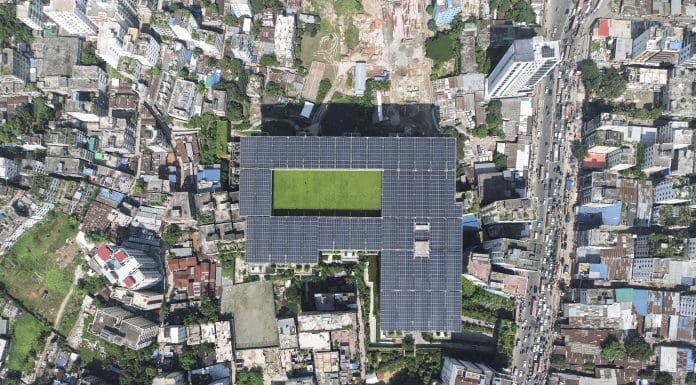
Four projects have been shortlisted for the RIBA International Prize 2026, which recognises outstanding architectural work from around the world
The Royal Institute of British Architects (RIBA) International Prize 2026 is considering four projects for this year’s prestigious award, with schemes in Belgium and Bangladesh making the shortlist.
The winner will be announced on 15 October 2026, alongside the recipient of the RIBA International Emerging Architect award.
The four projects and their descriptions:
1. BRAC University WOHA, Dhaka, Bangladesh
Built on a former landfill site in Dhaka, BRAC University transforms a neglected urban site into a vertical campus serving 20,000 students and public spaces, embedding the site into the local neighbourhood. The 15-storey building contains nine floors of teaching facilities topped with a publicly accessible park, creating a new design model for education in dense urban settings.
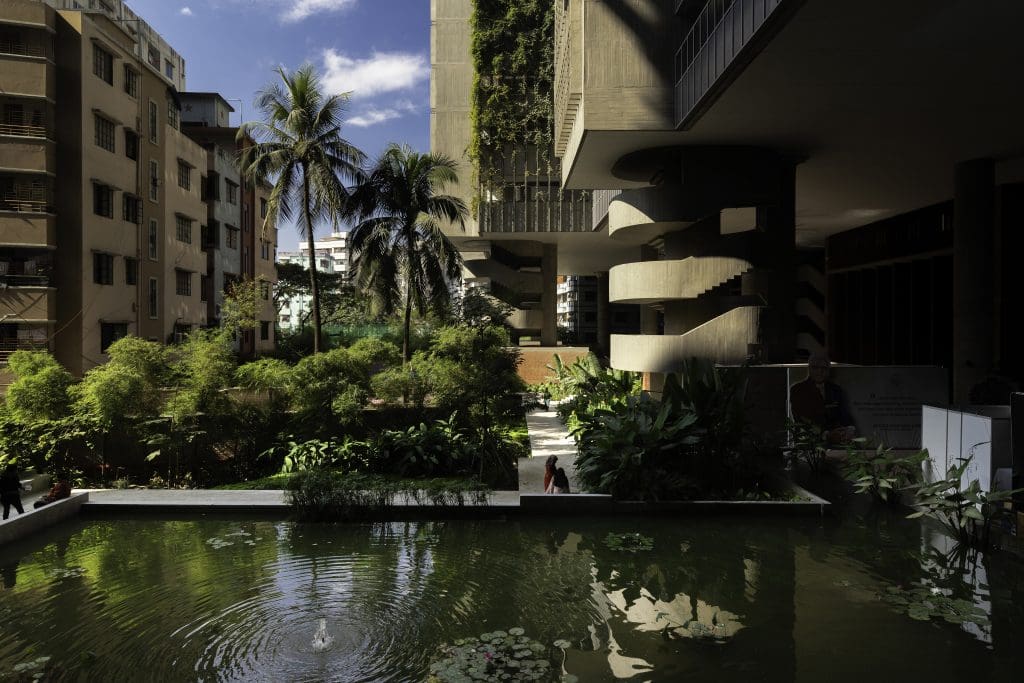
Using passive cooling strategies, natural cross-ventilation and extensive landscaping, the campus focuses on increasing climate resilience, while creating spaces for learning, interaction and community use. Through its integration of sustainability, education and public life, BRAC University demonstrates how architecture can support both environmental resilience and wider urban regeneration.
2. Green Field Factory of Karupannya Rangpur Limited, Nakshabid Architects, Rangpur, Bangladesh
Green Field reimagines the textile factory as a place of work, wellbeing and community. Inspired by rural Bengali homesteads, the seven-storey building integrates courtyards, water bodies, gardens and deep verandahs to create naturally ventilated workspaces that connect employees with the surrounding landscape.
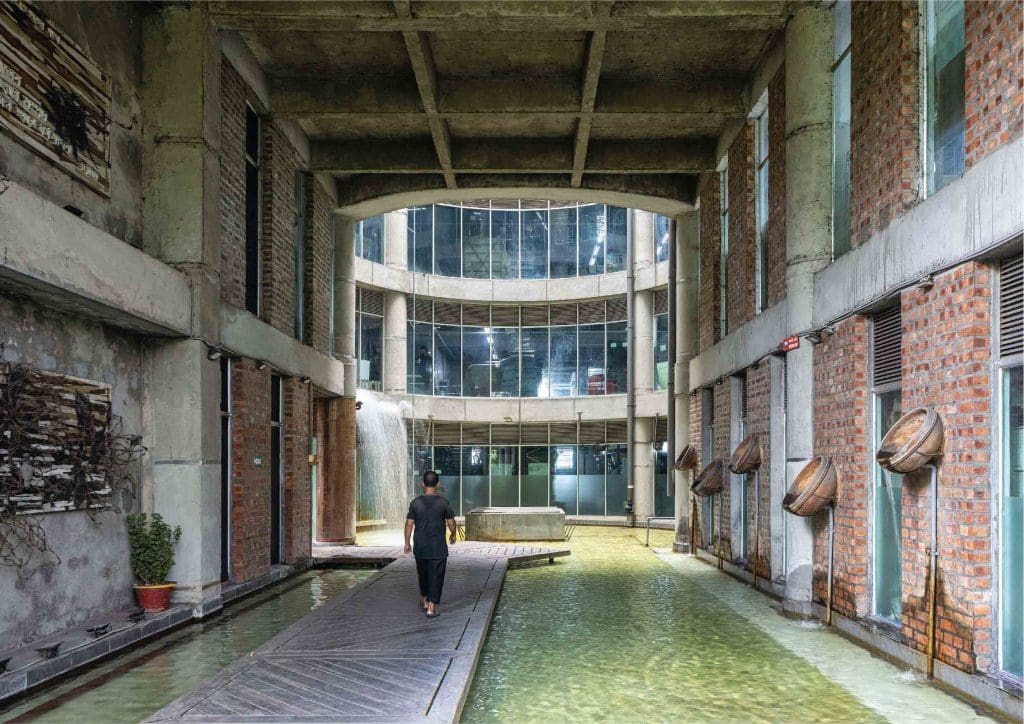
Designed around principles of natural ventilation and integrating nature into the space through biophilic design, the factory uses greenery, natural light and flowing air to reduce reliance on mechanical systems while creating spaces for rest, interaction and recreation. By placing the experience and well-being of its workforce at the centre of its design, Green Field demonstrates how industrial architecture can strengthen urban regeneration.
3. Royale Belge, Caruso St John Architects and Bovenbouw Architectuur with DDS+, Watermael-Boitsfort, Brussels, Belgium
Located in South-East Brussels, surrounded by forest, the landmark building was originally designed by Belgian architect René Stapels and Pierre Dufau in the 1960s as the headquarters of the insurance company. Royale Belge has been transformed into a public destination combining a hotel, shared workspaces and a restaurant.
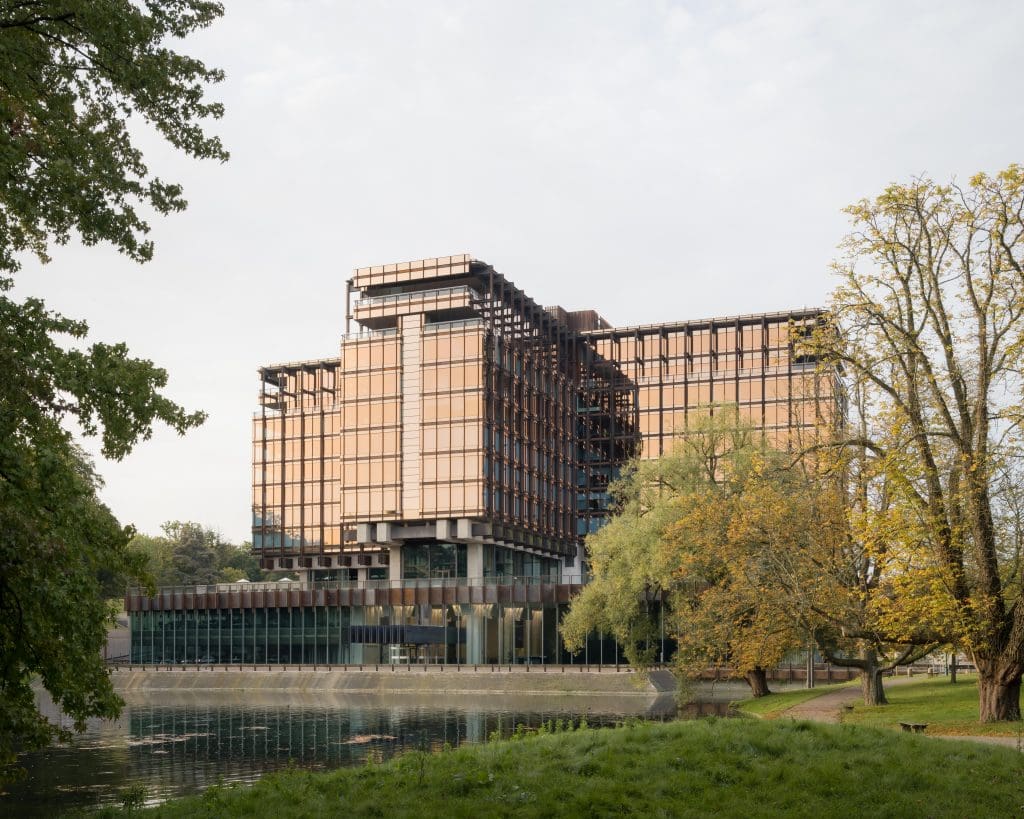
The project retains the protected structure, reuses existing materials wherever possible and introduces minimal interventions to improve energy performance. A new central hall carved through the existing podium creates a public space connecting the building’s different uses, demonstrating how modernist landmarks can be reconnected with contemporary city life.
4. Z33 Francesca Torzo Architetto, Hasselt, Belgium
Set within Hasselt’s historic Beguinage, a walled garden enclave of brick buildings at the heart of the city, Z33 extends and reimagines a 1958 museum as a space for contemporary art, design and public gathering. The new building sits in continuity with its historic surroundings, with a restrained brick facade to the street while opening onto a sequence of light-filled galleries, courtyards and gardens.
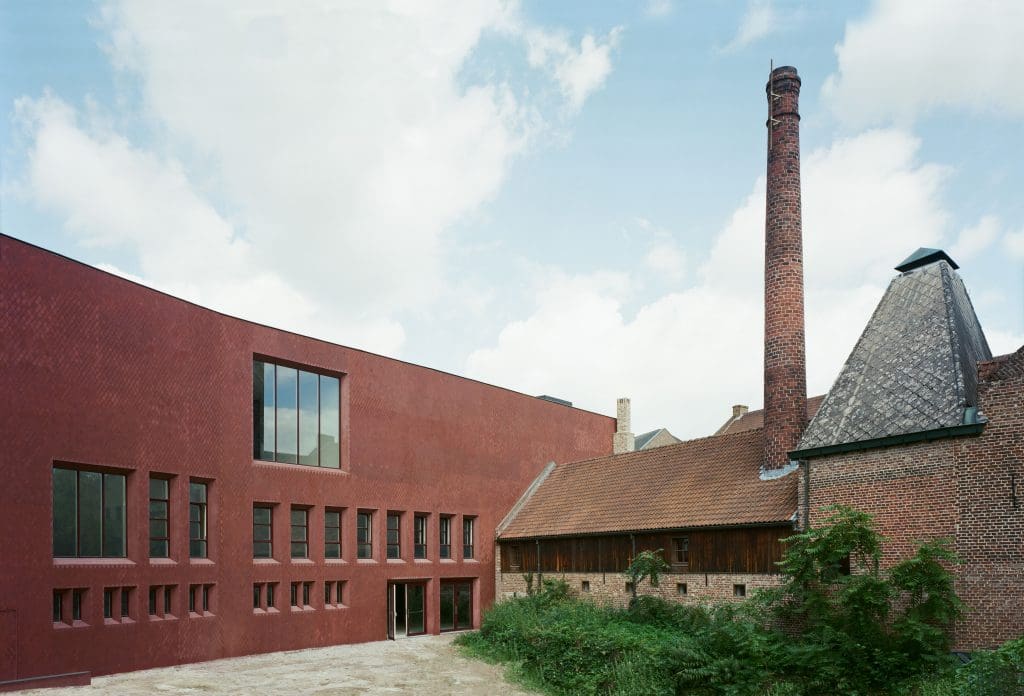
Using local materials, traditional craftsmanship and construction techniques, the project creates a dialogue between old and new. Inspired by the passages and gardens of the Beguinage, the extension demonstrates how cultural buildings can evolve while remaining rooted in the character of their place, creating a welcoming setting for culture and community.
Several RIBA prize shortlists have been announced
In August, the shortlist for the Neave Brown Award for Housing was released, consisting of four projects, three in London and one in Glasgow.
Of these four projects, Jury chair Helen Lee, associate director at Witherford Watson Mann Architects, said: “This year’s shortlist for the Neave Brown Award for Housing celebrates four exceptionally high-quality affordable housing projects built in the UK recently; each reflecting Neave Brown’s belief in community-focused and contextually responsive architecture.
“From pavilions in a free-flowing park land in Coulsdon, to low carbon 100% affordable housing in Canada Water, new homes in Haringey which successfully tackle a difficult edge site, and a high-quality landscape led scheme in Glasgow; this year’s shortlisted projects each respond skilfully to the unique urban challenges of their sites, creating beautiful and enduring places to live, supporting communities to grow and evolve.”
The post RIBA International Prize 2026 shortlist revealed appeared first on Planning, Building & Construction Today.