
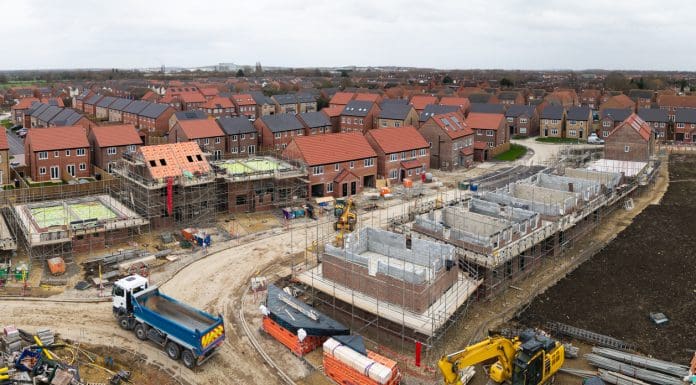
Max Hayes, research, associate director at Cavendish, explores how planning reform, affordability and returns will shape the UK housing recovery and create opportunities across housebuilders and building materials
After a prolonged period of weaker activity and lower returns, UK housebuilders and building materials companies are trading at valuations that imply a cautious view of the recovery ahead. Over the past five years, share prices across the two sectors have fallen by roughly 48%, compared with an 8% increase in the FTSE 250.
In many cases, valuations are now comparable with levels seen during the global financial crisis in 2008. Yet the underlying issue is not simply weaker housing demand or concern over asset values. Returns across the sector have also fallen significantly and current valuations imply that investors expect them to remain depressed for some time. The question is not so much whether conditions improve, but more how durable it will prove to be.
Affordability should guide the initial recovery
For housebuilders, the most immediate constraint on activity is affordability. Higher loan-to-value mortgages carry a substantial pricing premium, leaving deposit-constrained first-time buyers under pressure. Improving affordability can therefore support reservation rates and completions through sites that are already open before changes in the planning system result in a material increase in outlet numbers.
The Government’s proposed ‘Your First Home’ scheme directly targets this issue. Under proposals announced in September, first-time buyers would be able to purchase a new-build home with a 2.5% deposit, supported by a 20% government equity loan with an initial interest-free period. By reducing both the deposit requirement and the size of the mortgage, the scheme could support demand at the affordable end of the market.
MJ Gleeson is a prime example. The Company has the highest first-time buyer mix and the lowest average selling price amongst the housebuilders in our coverage, leaving it highly leveraged to an improvement in affordability. Stronger reservation rates and completions through its existing sites could allow volumes and returns to recover before planning reform delivers greater outlet growth.
By contrast, Berkeley illustrates the other end of the affordability spectrum. With a more affluent and less mortgage-dependent customer base, the Company is less sensitive to changes in rates, helping to explain why its return profile has remained comparatively strong.
Returns are central to the recovery
Housebuilders currently trade at around 0.68 times tangible net asset value on average, compared with a 20-year median of 1.22 times. Our view is that this discount reflects the decline in return on capital employed below the cost of capital.
This means that stronger housing demand alone will not be sufficient to restore valuations towards historical levels. Higher volumes can begin to improve returns, but a sustained re-rating depends on confidence that those returns can recover and be maintained.
In practice, the differences between companies are already visible. Persimmon is currently the only listed housebuilder trading above tangible book value in our analysis, reflecting one of the sector’s stronger return profiles.
By contrast, Crest Nicholson sits at the other end of the spectrum as its valuation reflects both depressed returns and operational challenges. Crest is, however, pursuing its own recovery through its strategy, ‘Project Elevate’, which is repositioning the business towards less price-sensitive, mid-premium buyers while targeting improved build quality, tighter cost and working-capital control. Delivery against these operational targets, alongside stronger market conditions, should provide a route to higher returns from current levels.
This is why stock selection matters. Every listed housebuilder in our analysis currently trades below its 20-year median valuation, but the pace and extent of any recovery in returns will vary marginally by company.
Planning reforms will determine the extent of recovery
Demand side initiatives can accelerate the initial recovery, but longer-term improvement in returns will depend on whether the supply side can respond.
If planning reforms allow developers to bring sites forward faster and provides greater visibility over future activity, companies should be better placed to deploy capital and improve returns. If these constraints persist, improving demand alone could prove insufficient to generate the level of recovery implied by longer-term sector averages.
Importantly, improvements in planning permissions alone do not confirm a recovery. Housebuilders will only approve and acquire land where the economics of development make sense. A recovery in planning permissions without a corresponding improvement in land approvals could therefore indicate that the constraint has simply shifted from the planning system to site viability.
Planning delays are crucial as they affect both volumes and capital efficiency. Longer lead times leave capital tied up and make it more difficult for companies to generate attractive returns from their asset base. Planning reform is not simply a housing-policy question, but rather it has a direct bearing on investment decisions across housebuilders and the wider construction supply chain.
Different parts of the sector will recover at different rates
The same applies to building materials. Businesses exposed to housing transactions and repair, maintenance and improvement (RMI) activity can respond earlier to improving affordability and consumer confidence. Eurocell, for example, has roughly 80% of revenue exposed to UK RMI and should benefit as housing transactions and RMI activity recovers.
Heavy-side manufacturers, by contrast, depend more heavily on planning reform, site openings and new-build activity. Bricks, blocks and aggregates are required at the beginning of a build programme, so businesses such as Ibstock, Michelmersh Brick Holdings and Forterra are more dependent on new site openings and housing starts. Their operational gearing gives them greater exposure when volumes recover but also leaves them with a greater reliance on planning throughput translating into viable construction activity.
Michelmersh demonstrates both sides of that exposure. Whilst UK brick volumes remain subdued, its premium, specification-led product portfolio has provided greater resilience than the wider market. As site openings and brick demand recover, higher utilisation provides scope for operational leverage.
This distinction is why the sector should be interpreted as a process of selective recovery. Some businesses can benefit as housing transactions and reservations improve, while others require an increase in site openings before the recovery becomes visible in volumes and returns.
Next steps for recovery
Our view is that the recovery will not be uniform. Current valuations leave scope for upside across the sector, but the strongest potential is likely to remain stock-specific, reflecting differences in returns, balance-sheet risk and recovery timing.
For housebuilders, the question remains whether improving demand simply lifts volumes through existing outlets or develops into a more sustained trend. Companies with consented land will be able to benefit earlier, while those with strategic land have more to gain if planning reform converts into viable new sites.
The same applies across building materials. Eurocell and Marshalls should be able to benefit sooner as housing transactions, reservations and RMI activity improve. Heavy-side producers such as Ibstock and Michelmersh offer greater exposure to a stronger housing recovery but remain dependent on planning throughput translating into site openings and housing starts.
The more important distinction over time will be between businesses that simply participate in a cyclical recovery and those able to turn better conditions into sustained growth in volumes and returns. If planning reform succeeds in increasing viable site openings, the recovery should become broader and more sustainable across the construction supply chain.
The post Planning reform will decide whether the UK housing recovery lasts appeared first on Planning, Building & Construction Today.