
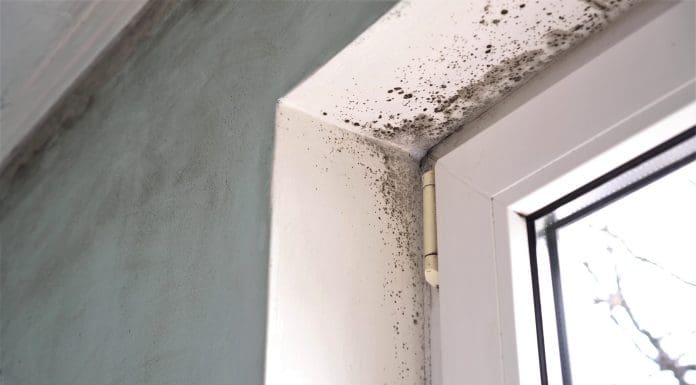
Awaab’s Law, which imposes strict deadlines on social housing providers for investigating and resolving damp and mould hazards, is more than a compliance requirement but a major opportunity for landlords to provide healthier homes, stronger landlord-tenant relationships and sector-wide improvement, writes Joe Lloyd-Allen of Nuaire
On 27 October 2025, Awaab’s Law came into force, requiring social landlords to investigate and address damp and mould hazards within strict timescales. The law is named after Awaab Ishak, the two-year-old who tragically died in 2020 following prolonged exposure to mould in his family home. His story has become a rallying point for change across the sector, and the legislation now represents a defining moment for social housing.
For housing providers, the arrival of Awaab’s Law introduces firm legal duties and places fresh demands on teams already working hard under resource pressures. Yet it also creates an opportunity: to reset the way damp and mould is managed; to adopt proactive practices; and to build greater trust with residents.
Understanding the requirements
The legislation is clear in its expectations. When a “significant hazard” such as damp and mould is reported, landlords must begin investigating within 10 working days. Where works are needed, these must start within a further five working days and be completed as soon as practicably possible, within 12 weeks.
In situations where a hazard is categorised as an emergency and poses an immediate threat to life or health, emergency make safe action must be taken within 24 hours.
These timescales underline the seriousness of damp and mould as health hazards. For residents, they provide reassurance that problems cannot be ignored or delayed, and greater transparency. For landlords, they provide a framework for action and a way to demonstrate accountability, along with an opportunity to strengthen relationships with tenants.
The opportunity for providers
For housing providers, the new law undoubtedly introduces additional responsibilities. Meeting the deadlines will require good systems, reliable communication and well-trained teams. But many providers are already making strides in this direction, and Awaab’s Law provides a framework to bring those good practices together.
By embedding early identification of hazards into routine inspections, landlords can get ahead of issues before they escalate. By adopting consistent processes for investigating reports, providers can avoid delays and ensure nothing slips through the cracks. And by capturing data more effectively, housing organisations can gain a clearer picture of which homes are most at risk and target resources where they will have the greatest impact.
These are not just compliance measures. They represent opportunities to improve stock condition, reduce long-term maintenance costs, and create healthier, more comfortable homes.
Tackling the root causes
While prompt repair is essential, the law also highlights the importance of prevention. Much of the damp and mould in social housing stems from condensation, which in turn is often linked to inadequate ventilation. Short-term fixes such as treating surface mould may provide relief, but they do not address the underlying problem.
This is where investment in effective ventilation becomes so valuable. Whether through positive input ventilation (PIV) systems such as continuous extract fans or whole-home solutions such as MVHR, the right technology can make a measurable difference to air quality. By ensuring homes are well ventilated, landlords can significantly reduce the risk of condensation and, with it, the recurring cycle of damp and mould.
Alongside technology, resident engagement plays a vital role. Helping tenants understand how to use ventilation systems correctly and explaining the part they can play in managing moisture, ensures solutions are used to their full effect. Together, these steps create conditions where damp and mould are far less likely to take hold.
From compliance to collaboration
The spirit of Awaab’s Law is about creating a safer and healthier standard of housing. While the deadlines and duties are fixed, how providers meet them will vary. What is clear is that success will come from a collaborative approach where landlords, residents and industry partners work together to put prevention at the heart of housing management.
While the focus for many providers will naturally be on ensuring compliance with the law, beyond the immediate adjustments lies a bigger opportunity: to embed a culture where safe, healthy homes are the norm and where damp and mould are treated not as inevitable but as preventable.
For the sector as a whole, it represents an opportunity to turn a difficult moment in history into a catalyst for long-term improvement.
The post Awaab’s Law: A new chapter for social housing appeared first on Planning, Building & Construction Today.