
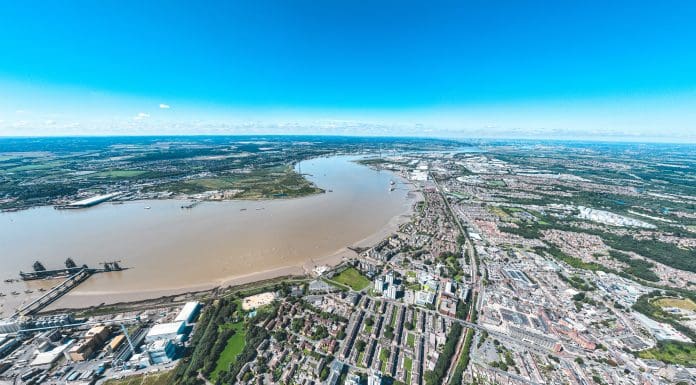
The Bouygues Murphy JV is seeking a large Tunnel Boring Machine (TBM) to drill through both the north and southbound tunnels for the Lower Thames Crossing
The Lower Thames Crossing is set to be one of the widest tunnels in the world, with current costs projected to be £11bn.
As such, in order to help keep costs down, the JV is seeking one machine that can drill both tunnels.
Tunnel digging will begin in 2028
In the coming summer, construction of the Northern entrance will begin, seeing a launch chamber dug 26m deep.
This chamber will also be the temporary home of a segment factory for the tunnels concrete lining, designed to withstand 6.5Bar of pressure from the Thames Estuary.
As well as being one of the widest road tunnels, the Lower Thames Crossing will be the UK’s longest road tunnel at 110 metres long.
Simon Lightwood, roads and buses minister, said: “The launch of the procurement process for one of Europe’s largest tunnelling machines marks a major step forward for this transformational project, backed by £891m in the Budget which demonstrates this Government’s determination to deliver the infrastructure our economy needs to grow.
“By unlocking vital capacity across the Thames, the Lower Thames Crossing will relieve congestion at Dartford and create better connections between our ports, manufacturing centres and communities, but also be a key driver of jobs, growth and opportunity.”
Planning approval was only granted this year
The Lower Thames Crossing has a storied history in trying to gain approval, but approval was finally given in March this year.
The project was originally proposed in 2009 to relieve congestion at the Dartford Crossing and connecting the Kent A2 to the Essex M25. Opposition has come from environmental groups and regulatory hurdles.
At the time of approval, Matt Palmer, executive director of National Highways for the Lower Thames Crossing, said, “The Lower Thames Crossing is one of the UK’s most important infrastructure projects. It will facilitate growth by providing quicker, safer, and more reliable journeys, as well as establishing a new standard for major projects focused on a net-zero future. This involves scaling up low-carbon construction methods and leaving a legacy of green spaces and skills.
“Our plans have been shaped by the local community and refined through rigorous examination by independent experts. We are more committed than ever to collaborating with our neighbors to develop the crossing in a way that provides them with opportunities for employment and skill development while minimizing negative impacts. We are ready to proceed and have our delivery partners in place. Today’s decision enables us to work with the government on funding and to start detailed planning, allowing us to commence construction as soon as possible.”
The post Lower Thames Crossing seeking one TBM for both tunnels appeared first on Planning, Building & Construction Today.
