
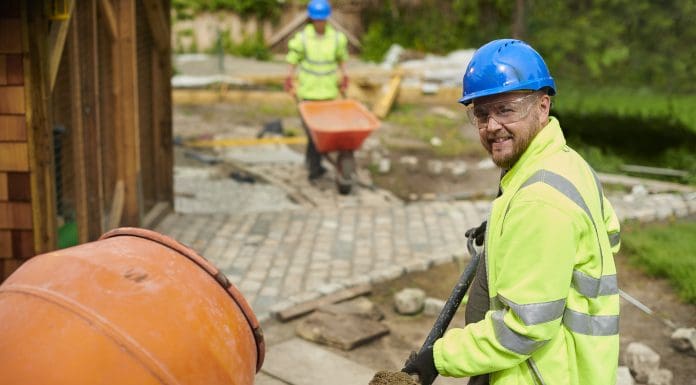
The Landscape Institute (LI) has released new resources for professionals to reduce their carbon impact while working
Expanding on the RIBA Plan of Work, the landscaping carbon reduction tools provide further guidance for landscaping professionals.
The tools tackle reducing carbon, adapting to changing climate, and handling aspects of public health and wellbeing.
The tools come at a time of great change
As the UK’s built environment sector is responsible for 25% of the country’s greenhouse gas emissions, and the effects of climate change are becoming increasingly apparent, it is essential that each subsector reduces emissions.
In this vein, the LI’s new tools tackle the reduction of carbon emissions associated with land use, materials, construction, and long-term management.
The resources were developed with input from Landscape Institute members and Greengage Environmental, and they use recommendations from the 2024 Landscape and Carbon report by the British Association of Landscape Industries.
They include:
- Landscape Carbon Tools Database and Summary Report – Providing a searchable overview of publicly available tools for carbon assessment in landscape projects, with tools for project stages, scales, and landscape elements
- Environmental Product Declarations (EPDs) and Product Category Rules (PCRs) Overview and Factsheets – EPDs support the standardised, transparent, and evidence-based material selection, while PCRs bring consistency and credibility to calculating impacts for product selections
- EPD Databank Database and Summary Report – Provides an overview of EPD data for landscaping and related products
The LI landscaping carbon reduction tools can be found here.
More work is needed to decarbonise the built environment
As an example, in November last year, the Welsh government released their draft budget for 2026-27 with the following investments:
- £445.9m for social housing grant which includes £26.8m in additional financial transactions capital to support loans to registered social landlords for home building
- £110m for Dowry gap funding and major repairs allowance
- £96.9m for decarbonisation
- £2.3m to meet initial costs for the Homelessness and Social Housing Allocations (Wales) Bill
- £38.25m capital funding and £3.7m revenue funding for the Warm Homes programme
- £1.3m for Academi Wales
- £223.8m for homelessness support and prevention.
The Chartered Institute of Housing’s Welsh branch, CIH Cymru, expressed disappointment at the money allocated to decarbonisation, as it is only an inflationary uplift rather than a large, dedicated investment into decarbonising homes.
Matt Dicks, the national director of CIH Cymru, said: “It is clear that we need more social and affordable homes to help meet the rising levels of housing need in Wales and as such we welcome the uplift in social housing grant to enable registered social landlords to develop the homes we need. But we also need to ensure our existing homes are both affordable and sustainable. It is therefore disappointing that the decarbonisation funding has only seen an inflationary rise in the budget. Both these policy areas need sufficient funding if we are to meet their overall aims of providing safe, sustainable and affordable homes in Wales.”
The post New set of landscaping carbon reduction tools published appeared first on Planning, Building & Construction Today.