
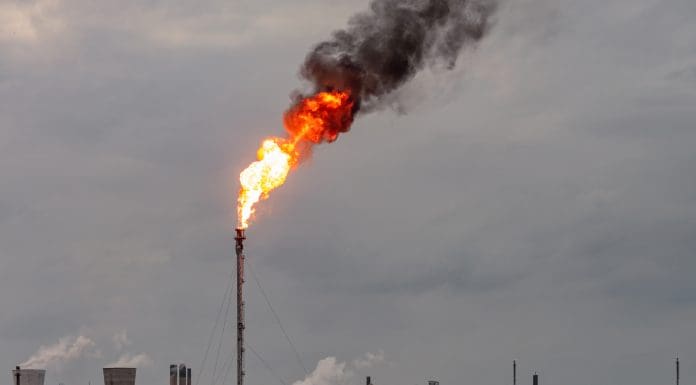
Capturing and reusing waste heat from industry could strengthen UK’s industrial competitiveness, as well as driving progress towards net zero
Industrial heating accounts for around 14% of UK emissions, yet approximately half of the energy used in UK industry is lost as waste heat.
This is largely due to unavoidable losses in processes that require extremely high temperatures, which represents a significant efficiency and cost challenge for UK businesses.
A new report from the Royal Society suggests that reusing waste heat could boost UK competitiveness
The report, ‘Unlocking thermal energy: Capture, storage and re-use of industrial waste heat’, published today, finds that capturing and re-using this heat could help decarbonise industry, reduce overall energy demand, improve productivity, and provide new, local sources of heat for communities.
Industries including steel, cement, glass and chemicals routinely heat materials to temperatures of up to 2000°C before cooling them again, resulting in large amounts of valuable thermal energy being lost to the environment. Even as these sectors transition away from fossil fuels towards cleaner sources of energy such as hydrogen and electricity, significant amounts of heat will continue to be lost unless new systems are put in place to capture, store and reuse it.
Using heat cascades to capture and reuse waste heat
The report proposes an approach to thermal energy efficiency based on heat cascades, where high temperature waste heat is captured at source and reused at progressively lower temperatures. After the original industrial process, the waste heat could initially be captured and re-used on site where possible, then captured again and shared across local industrial clusters, and finally captured again to be supplied to heat networks for heating in homes and public buildings. By cutting the need to use more energy to heat those additional industries and buildings, heat cascades could significantly reduce emissions and ease on the demand for renewables as heating is electrified.
Professor Andy Woods FRS, head of Institute for Energy and Environmental Flows at the University of Cambridge and lead author of the report, said:
“If the UK is serious about reaching net zero, dealing with the vast amounts of industrial waste heat needs to be integrated into decarbonisation strategies now, and not as an afterthought. As industry makes the switch from fossil fuels to cleaner alternatives, we have a huge window of opportunity to integrate systems to capture and reuse industrial waste heat into future infrastructure. This would strengthen long-term industrial competitiveness and provide a cost-effective way of decarbonising industry.”
While transitioning to cleaner fuels remains the most important step towards decarbonisation, there is also a critical need to consider approaches to capture and reuse waste heat to reduce overall energy demands. Failing to act now means the UK risks locking in new technologies and industrial systems that are incompatible with future heat capture and reuse, potentially putting UK industry at a competitive disadvantage.
The report calls for the Government to build on existing assessments to develop a detailed understanding of where waste heat is generated and where heat demand exists across industry. This would support the development of heat capture, transport and storage technologies along with the necessary regulatory and financial frameworks to enable investment.
By reimaging waste heat as a valuable resource, rather than an unavoidable loss, the UK could unlock a substantial energy resource that would strengthen industry and help in the transition to net zero.
The post Waste heat from industry could be secret weapon to net zero, says Royal Society appeared first on Planning, Building & Construction Today.