
Civil engineering is doing the heavy lifting, but a sluggish housing market and a nervous Treasury mean the industry still has a steep hill to climb, explains Drilon Baca, economist at Glenigan
The latest Glenigan Construction Index shows a mixed picture for UK construction, with a major uplift in civil engineering activity helping offset continued weakness in the residential and non-residential building sectors.
That’s good news, but not enough to carry the whole industry.
Infrastructure and utilities work recorded substantial growth during the three months to September, but overall project starts remained subdued, falling 2% from the preceding three months and 18% from a year earlier.
Housing market is still the weakest link
The residential sector remains the primary drag on overall construction activity. In the three months to September, residential project starts fell 8% from the preceding three months and were 33% lower than the same period last year.
Developers remain cautious amid challenging market conditions, with many continuing to prioritise existing schemes rather than bringing forward significant volumes of new projects. The ongoing slowdown in housing activity is weighing heavily on overall industry performance and remains the key factor behind the weakness in the headline index.
Private housing shows small shoots of revival but social housing weakens sharply
In the residential market, private housing showed some resilience, rising 4% from the previous three months. However, activity remained 32% below last year’s level, highlighting the sector’s ongoing challenges despite short-term improvement.
By contrast, social housing took the hardest knock. Project starts fell 33% on the quarter and 35% on the year
A broader recovery in residential construction will demand a sharp uptick in buyer confidence, greater development viability, and sustained investment in affordable housing programmes.
Non-residential construction loses momentum
Non-residential project starts also weakened, falling 15% from the preceding three months and 16% from a year ago. The decline reflects a slowdown across several commercial and public-sector categories, despite stronger activity within selected markets.
Civil engineering records exceptional growth
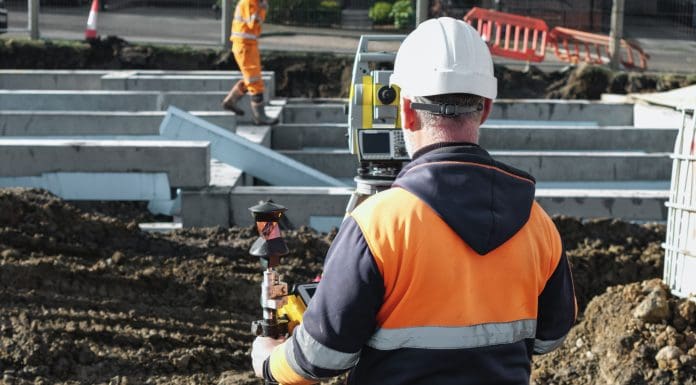
Civil engineering posted the strongest performance, with an exceptional period of growth. Project starts surged 101% against the preceding three months and stood 43% higher than a year earlier, making the sector the standout performer across UK construction.
The sharp rise reflects growing momentum in major infrastructure and utility schemes, with several large projects progressing to construction.
Infrastructure activity more than doubled, rising 130% from the last quarter and 43% higher than a year earlier.
Utilities construction also performed strongly, with starts up 73% quarter-on-quarter and up 43% year-on-year. Continued investment in energy, water and network infrastructure is helping to sustain activity and provide a vital lifeline for the wider construction industry.
Industrial sector provides a bright spot
Industrial construction was one of the strongest-performing sectors. Project starts rose 20% from the previous three months, although activity remained 9% lower than a year earlier.
Demand for logistics, warehousing and advanced manufacturing facilities continues to underpin investment decisions. Long-term structural trends linked to supply chains, distribution networks, and business expansion plans continue to support the industrial market. That makes industrial a useful guide to where investors feel comfortable committing.
Offices and retail are subdued
Office construction faced a tougher quarter, with starts down 15% from the preceding three months and 13% below last year’s level. Although demand for high-quality, sustainable office space continues to support selected developments, broader business uncertainty is weighing on activity.
Retail construction also remained weak, with project starts down 23% from the previous three months and 26% year-on-year. Ongoing changes in consumer behaviour and retailer investment priorities continue to constrain new development
Hotel and leisure projects followed a similar pattern, dropping 20% from the previous three months and 25% year-on-year.
Public sector projects deliver a mixed bag
Across publicly funded construction, the picture was mixed. Health project starts were the public sector’s standout performer; although they slipped 2% from the previous three months, they remained 11% higher than a year ago, making Health one of the few sectors to record annual growth.
Education saw a particularly disappointing period, with starts falling 41% from the previous three months and 27% below last year’s level. Project pipelines seem constrained despite continued investment in educational facilities.
Community and amenity projects also declined, falling 5% quarter-on-quarter and 29% year on year.
Regional activity remains subdued despite pockets of resilience
Looking across the regions, construction activity generally remained weaker than a year earlier.
The North West led the pack, with project starts rising 23% against the quarter, though activity remained 17% lower than last year.
Wales also proved relatively resilient, recording an 11% decline against the preceding three months but only a modest 6% fall year-on-year.
Elsewhere, activity weakened considerably. London saw project starts fall 43% against the preceding three months and 57% year-on-year, while the East of England saw one of the steepest declines, with activity down 57% quarter-on-quarter and 73% annually. The North East, West Midlands and Yorkshire also recorded substantial declines.
Civil engineering strength carries the load
While the latest Glenigan Index highlights ongoing challenges across residential and commercial building sectors, a sharp rise in civil engineering activity provides a much-needed counterbalance. Major gains in infrastructure and utilities show that investment in essential national assets is now translating into on-the-ground construction activity.
However, residential construction remains the industry’s weakest link. Construction needs housing activity to recover more decisively. Housing needs buyers who feel able to commit, and developers who can plan ahead with confidence. If the Autumn Budget delivers that, the sluggish spell could soon end.
The post Civil engineering surge offsets weakness across construction sectors appeared first on Planning, Building & Construction Today.