
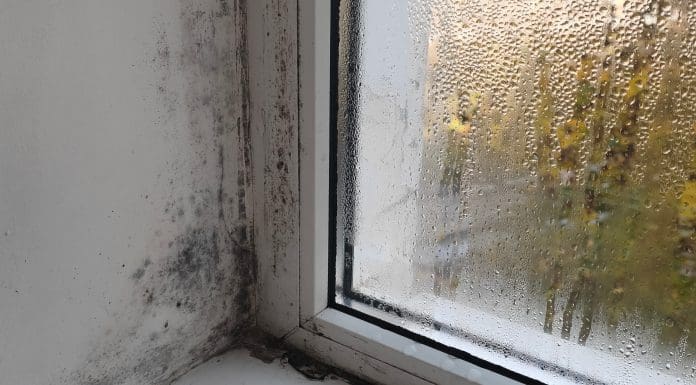
Discover how housing asset teams can diagnose recurrent damp and mould by investigating moisture sources, surface humidity, thermal performance and ventilation
Repeated mould treatment can leave the moisture mechanism unresolved. Housing asset teams need investigations that distinguish water ingress, surface humidity, and ventilation performance before commissioning permanent remedial works.
Recurrent mould following remedial work should prompt an asset manager to review the original diagnosis, specification and evidence of completion. The treatment may have been delivered correctly while leaving the conditions responsible for growth substantially unchanged.
The commercial consequence is a repeat instruction against the same asset, often with limited information about why the previous intervention failed. The technical consequence is more serious: a surface condition may be treated repeatedly without establishing the moisture source, transport route or environmental conditions sustaining it.
A competent investigation needs to separate these mechanisms and assess their interaction. Urgent measures to protect occupants must proceed alongside that work. Government damp and mould guidance makes clear that surface removal alone does not prevent recurrence and that action should not wait for medical evidence.
Distinguish the source from the observed damage
Liquid water ingress, plumbing leakage, residual construction moisture and condensation require different investigative approaches. A mould distribution or moisture reading may help locate an affected area, but it does not establish the cause without supporting evidence.
Historic England’s investigation guidance identifies defects, services and external moisture sources as potential contributors. Its joint principles with RICS and the Property Care Association focus on understanding how moisture behaves in traditional construction before selecting remedial treatment.
For portfolio teams, the survey brief should therefore require a reasoned diagnosis for each affected location. It should identify the proposed mechanism, evidence supporting it, and credible alternatives that remain unresolved. Describing a defect as condensation should lead to an assessment of the relevant thermal and ventilation conditions, rather than ending the investigation.
The same distinction applies to apparently dry fabric. A low material reading at one location does not demonstrate satisfactory surface conditions throughout the dwelling. Conversely, an elevated reading should not automatically trigger a particular damp-proofing intervention.
Assess surface conditions as well as room humidity
Room relative humidity is temperature-dependent. The National Physical Laboratory explains the relationship through actual and saturation vapour pressures; the same moisture content can produce a higher relative humidity at a colder surface.
An illustrative calculation shows the significance. At an air temperature of 20°C and 60% relative humidity, the dew point is approximately 12°C. At a surface temperature of 15°C, assuming the same local water vapour pressure, relative humidity at that surface is approximately 82%. These figures are calculated from the Magnus relationship published by the National Physical Laboratory, rather than measurements from a surveyed home.
The surface is above dew point, yet its humidity is substantially higher than the room reading. Government-commissioned moisture research distinguishes surface condensation from the elevated surface humidity that can support mould growth. The outcome depends on duration, temperature and substrate; a single humidity threshold is not a universal pass or fail test.
This makes cold junctions, reveals and discontinuities in insulation relevant to the diagnosis. Where the thermal detail is uncertain, the investigation may need to establish the construction and assess the junction rather than infer its performance from a room sensor. Monitoring can support that assessment, provided sensor position, operating conditions and the period observed are recorded.
Review alterations to fabric and services together
Retrofit work can change both heat flow and moisture behaviour. Historic England warns that energy-efficiency interventions in traditional buildings can alter their hygrothermal performance, including drying behaviour and conditions at thermal bridges. Its guidance supports assessment of the combined effects of an intervention.
For an asset team reviewing a repeat case, the relevant history therefore extends beyond damp and mould orders. Replacement windows, insulation work, changes to heating and ventilation alterations may all warrant investigation. Their presence is not evidence that they caused the problem; their design and installation records help establish what changed.
A useful review asks whether the original ventilation strategy remains coherent and whether the completed fabric works match their design intent. Specifying another isolated component without answering those questions can leave interfaces between trades unexamined.
Use monitoring to test a diagnosis
Environmental monitoring is most useful when it addresses a defined uncertainty. Temperature and humidity data may help establish whether adverse conditions are sustained or intermittent, but the investigator must relate the readings to weather, heating operation, and the observed defect.
The monitoring plan should state where instruments will be located, what question the data are intended to answer, and when the findings will be reviewed. It also needs an escalation route if conditions deteriorate. Collecting additional data should not defer necessary protective action or become an open-ended substitute for an engineering decision.
The resulting work order should trace each proposed intervention to the diagnosed mechanism. For example, evidence of water penetration requires a specification addressing the identified ingress route; evidence of ventilation underperformance requires examination of the installed system and its operating conditions. Where mechanisms coexist, the scope and sequence of work should recognise that interaction.
For recurrent cases, the technical objective is to establish why the previous intervention did not control the problem. That finding gives the asset manager a defensible basis for revising the specification, commissioning further investigation or challenging incomplete delivery.
David Bly of Cornerstone Management Services Ltd will discuss property-health investigations at PBC Today’s Introducing Healthy Homes webinar on 15 December 2026, 2–3pm GMT. View the programme and register here.
The post Diagnosing recurrent damp and mould across housing portfolios appeared first on Planning, Building & Construction Today.